
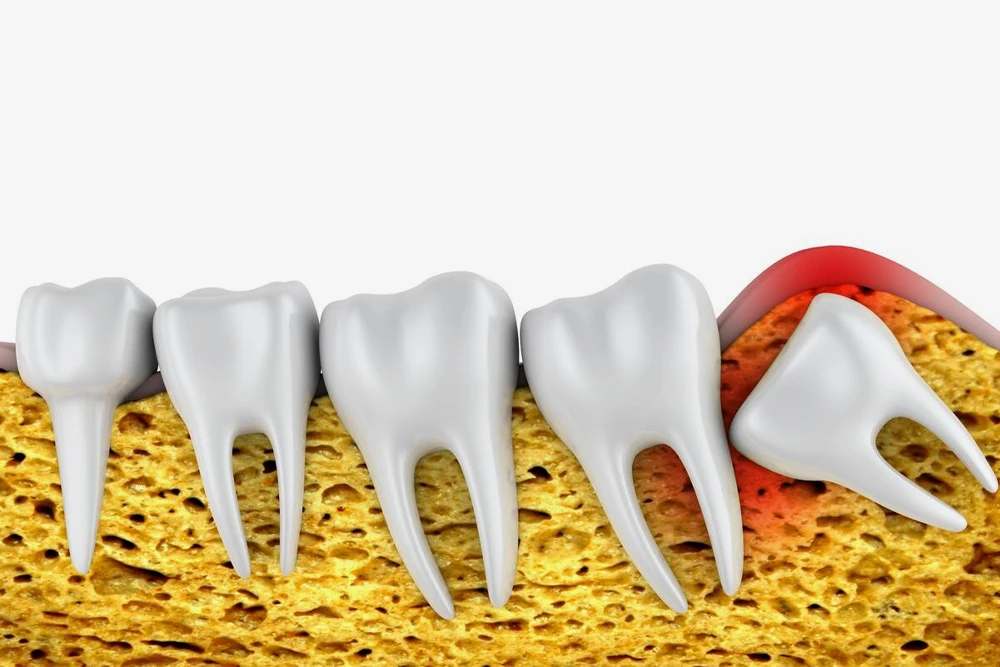
If you have been informed of an impacted tooth in your mouth, I am here to share with you all there is to know about impacted teeth. A tooth is declared impacted if it fails to pass through the gum-line to grow into position on its own and instead remains stuck or impacted in the gum tissue or bone. Impacted wisdom teeth are a common occurrence.
Types of impacted teeth
- Horizontal impaction occurs when your tooth grows at roughly a 90-degree angle to the rest of the teeth. Horizontal impaction placed pressure on the roots of adjacent teeth
- Vertical impaction wherein the tooth, although growing in the right direction, is too close to the neighboring teeth that are blocking its eruption.
- Angular impaction causes the tooth to grow at an angle eventually blocking it below the gum line.
- Partial eruptions stop the growth of the tooth from the gums due to its proximity to other teeth.
What Causes Impacted Teeth?
- Overcrowding since the dental arch due to smaller jaw size is unable to fit more teeth, causing some to grow in and others to stop.
- Some teeth grow in a twisted angle that affects their fit ceasing them to eventually stop pushing through.
- Genetic factors leading to abnormal growth of the teeth or jaw
- Over-retained baby teeth hinder the normal growth of permanent teeth by taking their place, leading to dental crowding and impacted teeth.
- Supernumerary, meaning extra teeth in the mouth, is a condition that leads to displacement or complete rotation of maxillary incisors leading to impacted teeth.
Symptoms of an Impacted Tooth
- Painful or tender gums
- Red and swollen gums and pain when chewing, biting, or swallowing
- Jaw pain
- Bad breath and taste
- Prolonged headaches
- Abnormal tooth gaps
Complications of Impacted Teeth
- Malocclusion (teeth misalignment) is the result when you leave impacted teeth untreated since they are overcrowding in the jaw.
- Cysts due to impacted teeth go on to damage the roots of nearby teeth or destroy the bone
- Gum Disease
- Tooth decay or loss
How are impacted teeth treated?
Your dentist or orthodontist will conduct a diagnosis of your impacted tooth by evaluating your mouth by:
- Asking questions about your dental symptoms and health
- Examining the condition of your teeth and gums
- Taking dental X-rays to reveal the presence of impacted teeth, and any signs of damage to the bone
The treatment of impacted teeth depends on various factors such as:
- whether your teeth are milk teeth or adult teeth
- whether an orthodontic intervention can help them grow properly
- the severity of the condition of your impacted teeth
Recommended treatment options for impacted teeth include:
- Waiting and monitoring: In case of a lack of symptoms, your dentist will monitor your impacted tooth to routinely check for any problems instead of removing the tooth surgically.
- Extractions with oral Surgery: Oral surgical extraction requires the expertise of a dedicated oral surgeon with extraction experience.
- Eruption aids: In the case of impacted canine teeth, eruption aids such as braces, brackets, or extraction of teeth help the tooth to erupt properly. Treating impacted teeth with braces involves a small surgical procedure to expose the tooth followed by affixing a small ring and chain to the braces wire. The subsequent tension slowly pulls the tooth out.
There are certain cases wherein salvaging the impacted tooth may not be an option, leading to its removal. The ideal way towards a full diagnosis and effective treatment plan is by consulting a specialist orthodontist who can equip you with the best treatment plan that suits your medical needs.
Book a free consult with the well-trained and reliable orthodontists at Thurman Orthodontics.
Dr. Brian Thurman has spent his entire life enjoying all the beauty that California has to offer. A Fresno native, he still escapes to the ocean or the mountains whenever his busy schedule allows. Driven by his love for natural beauty, Dr. Thurman enjoys creating beautiful smiles and healthy bites that last a lifetime. He is proud to be the only Ivy League trained Orthodontist in the Fresno/Clovis area.