
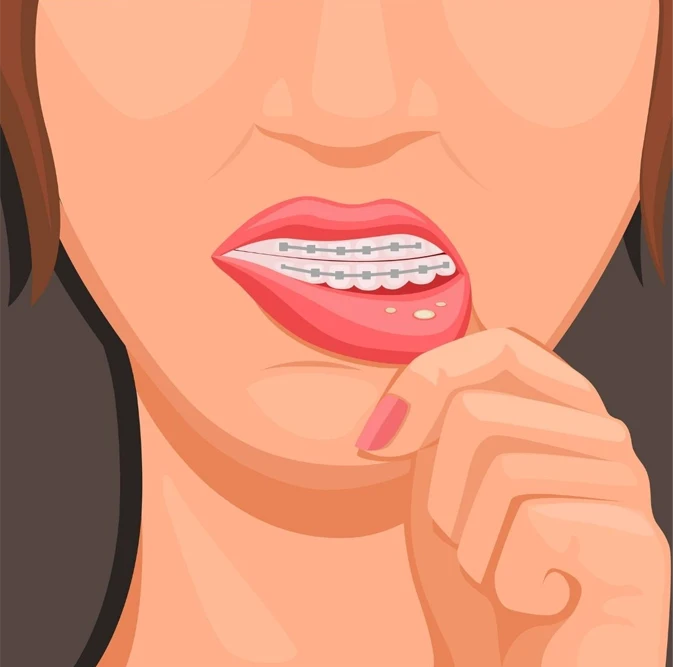
What Are Canker Sores From Braces?
Canker sores from braces are small, painful ulcers that form inside the mouth when brackets or wires irritate the soft tissues. They commonly appear on the cheeks, lips, tongue, or gums and may cause burning or tingling sensations, especially while eating or speaking.
Why Do You Get Canker Sore From Braces?
Canker sores are a common side effect of orthodontic treatment. When you first get braces, your mouth adjusts to a whole new landscape of brackets, wires, and edges, and that’s where most sores start. Common reasons include:
- Brackets and wires constantly rub against soft mouth tissues, causing irritation and sores.
- Your inner cheeks and lips need time to toughen up to the new hardware.
- Accidental cheek or lip bites create tiny cuts that quickly turn into sores.
- Spicy, acidic, or hard foods further irritate already sensitive oral tissue.
- Food and bacteria buildup around brackets worsens mouth irritation over time.
- Wire tightening or adjustments leave your mouth more sensitive and sore-prone for days.
- Stress weakens your immune system, making canker sore outbreaks more likely.
How To Prevent Canker Sores From Braces?
Taking a few simple precautions can significantly reduce your chances of developing painful canker sores during braces treatment.
-
Apply Silicon Covers:
If you are on braces, you might know about orthodontic wax. The silicon covers work in the same fashion. They protect your lips, mouth, and cheeks from coming in contact with the braces brackets. Please make sure the braces are completely dry when you put on a silicon cover on them. You can get silicon covers from any medical shop near you.
-
Rinse With Salt Water
A rinse with warm salt water soothes your pain and inflammation. Salt is a disinfectant, so it can also prevent the infection from spreading in your mouth. Mix some salt in a glass of warm water. Rinse at least 2-3 times a day or as much as you need to get relief from discomfort.
-
Use Orthodontic Wax:
Orthodontic wax also helps in preventing mouth ulcers. When you place the orthodontic wax on your braces, it will soften the surface. It protects the contact of the bracket’s sharp corner and wires with your mouth. This wax is waterproof and doesn’t slip easily. Therefore, it gives you relief for a longer time. Rub a small amount of wax in your fingertips for a few seconds to warm it before applying.
-
Eat Simple Foods:
The irritation of your mouth tissues will further aggravate with spicy and acidic food. As mentioned earlier, these kinds of foods encourage mouth ulcers. So eat simple food while you are starting with your braces treatment. Eat soft and mushy foods that are not too spicy and hard in texture. Mashed potatoes, scrambled eggs, and shakes are suitable options to eat while on braces. Also, avoid hard food with braces to prevent the breaking of brackets and wires.
-
Keep Your Mouth Hydrated:
A dry mouth increases the irritation and discomfort due to a canker sore. Drink plenty of water so that your mouth can produce enough saliva. The antibodies in saliva prevent the spread of ulcers. A moist mouth also minimizes the pain of damaged inner cheeks due to braces.
-
Maintain Good Oral Hygiene:
Brush after every meal using a soft-bristle toothbrush and floss daily with orthodontic flossers to remove food particles that could irritate sores. Rinse with an alcohol-free mouthwash to soothe tissues without drying them out.
-
Use a Mouthguard During Sports:
If you’re active in sports, wear a mouthguard over your braces to prevent trauma-induced ulcers from accidental impact to the mouth.
How To Treat Canker Sores From Braces?
Once a canker sore appears, the right treatment can ease the pain and speed up healing significantly. Here’s what actually works:
-
Try a Topical Numbing Gel
Topical gels like benzocaine (such as Orajel or Anbesol) can numb the area and provide quick, targeted relief directly on the sore.
-
Apply a Warm Tea Bag
Tea carries anti-inflammatory and antiseptic properties that help reduce pain and speed up healing. Herbal teas like chamomile are particularly soothing when applied directly to the sore.
-
Take Over-the-Counter Pain Medication
If canker sores are causing significant discomfort, mild pain relievers like ibuprofen or acetaminophen help manage pain and reduce inflammation while the sore heals.
-
Apply Honey Directly to the Sore
Honey has natural antibacterial properties that can provide relief and help the sore heal faster when applied directly to the affected area.
-
Visit Your Orthodontist if It Persists
If a sore lasts longer than two weeks, becomes unusually large or painful, or is accompanied by fever or swollen lymph nodes, your orthodontist can evaluate it and recommend a stronger treatment if needed.
How Long Do Canker Sores From Braces Last?
Most mouth sores from braces clear up on their own within 7–10 days as your mouth gradually adjusts to the hardware. Smaller sores tend to heal faster, while larger or frequently irritated ones may linger a bit longer, depending on your oral hygiene and overall health. The frequency also decreases over time. The longer you wear braces, the more resilient your inner cheeks and lips become. That said, if a sore isn’t improving after two weeks or looks infected, it’s worth a quick visit to your orthodontist.
Book a Consultation Today
Speak with a specialist to consult about Canker Sores From Braces.
Conclusion
These are preventive treatments, not permanent solutions. After following all the above steps, if your complications are still increasing, get in touch with your dentist. Contact Thurman Orthodontics for consultation regarding the early side effects of braces treatment. Our team of expert orthodontists provides the best treatment with minimum pain.
Frequently Asked Questions About Canker Sores From Braces
1. When should you see an orthodontist for canker sores from braces?
You should consult your dentist or orthodontist if:
- Sores last longer than two weeks
- Pain becomes severe or interferes with eating
- Ulcers keep recurring frequently
- You notice swelling, pus, or fever
2. Are canker sores from braces contagious?
No, canker sores are not contagious at all. They form due to internal irritation or friction inside your mouth and cannot be passed on to anyone else through contact or saliva.
3. Can I still go to my orthodontist appointment if I have a canker sore?
Yes, there’s no need to reschedule. In fact, it’s a good idea to mention it to your orthodontist, who may spot a poking wire or misaligned bracket causing the sore and fix it on the spot.
4. Do canker sores from braces affect my treatment progress?
In most cases, no. However, if persistent sores make it difficult to maintain proper oral hygiene or keep up with appointments, it could indirectly slow things down, which is why addressing them early matters.
5. Will I keep getting canker sores throughout my entire braces treatment?
Not necessarily. Sores are most common in the early weeks of treatment. As your mouth adapts and inner tissues toughen up, most patients notice them becoming less frequent or stopping altogether over time.
6. What’s the difference between a canker sore and a cold sore?
Canker sores form inside the mouth on soft tissue and are not contagious. Cold sores, on the other hand, are caused by a virus, appear on the outside of the lips, and can be spread through contact.

Dr. Brian Thurman has spent his entire life enjoying all the beauty that California has to offer. A Fresno native, he still escapes to the ocean or the mountains whenever his busy schedule allows. Driven by his love for natural beauty, Dr. Thurman enjoys creating beautiful smiles and healthy bites that last a lifetime. He is proud to be the only Ivy League trained Orthodontist in the Fresno/Clovis area.